Latvia is holding parliamentary elections on Saturday, October 3, 2026, amidst heightened national security concerns stemming from neighboring Russia and a persistent rise in the cost of living. The election’s outcome is widely expected to maintain the Baltic nation’s steadfast pro-European Union (EU) and pro-Ukraine foreign policy.Polling stations across Latvia and abroad opened at 8 AM local time (0500 GMT) and are scheduled to close at 8 PM (1700 GMT). A total of 1,428 candidates from 14 political parties and alliances are vying for 100 seats in Latvia’s 15th Saeima (parliament). By 11 AM GMT, voter turnout stood at 25 percent, with fewer than 400,000 people having cast their ballots. Parties or alliances must secure at least five percent of the vote to enter parliament.National security remains central to Latvia’s political discourse, four years after Russia launched its full-scale invasion of Ukraine on February 24, 2022. Most major parties support maintaining high defense spending and continued assistance to Ukraine. Prime Minister Andris Kulbergs’ center-right United List Party is currently leading in opinion polls with over 14 percent support. However, the current ruling coalition, comprising United List, New Unity, Union of Greens and Farmers, and National Alliance, is unlikely to retain power based on current surveys.The populist Sovereign Power Party, led by Julia Stepanenko, which has been criticized for its soft stance on Russia, is projected to secure over nine percent of the vote, potentially making it the second-largest party. This party opposes military aid to Ukraine and increased defense budgets, prioritizing domestic economic issues instead. However, most major parties have indicated they would not cooperate with Sovereign Power, making its participation in government unlikely. The Latvia First Party, led by businessman Ainārs Šlesers, is seen as a potential coalition partner. The pro-European social-democratic party, The Progressives, which advocates for strong social security and continued support for Ukraine, is expected to garner around six percent of the vote.Beyond security, voters are deeply concerned about rising inflation, low wages, pressure on the healthcare system, and a declining population. The International Monetary Fund (IMF) projected Latvia’s consumer price inflation at 3.0 percent for 2026, while the European Commission estimated it at 3.6 percent. Real Gross Domestic Product (GDP) growth is projected at 2.2 percent by the IMF and 1.4 percent by the European Commission for 2026.Latvia has been a member of the North Atlantic Treaty Organization (NATO) and the European Union since 2004. It views Russia as its primary security threat and has significantly increased its defense spending, allocating approximately five percent of its GDP to defense since Russia’s full-scale invasion of Ukraine in 2022. The country has seen recent political shifts, with former Prime Minister Krišjānis Kariņš resigning in August 2023 and his successor, Evika Siliņa, resigning in May 2026 due to coalition disputes and criticism over anti-drone defense system implementation.Following the closure of polling stations, exit poll results are expected, with official preliminary results anticipated on Sunday. Coalition-building talks are expected to commence, a process analysts predict could be lengthy and complex. The final composition of the new ruling coalition remains unknown, as no single party is expected to secure an outright majority. Consequently, the identity of Latvia’s next Prime Minister will depend on these coalition negotiations.
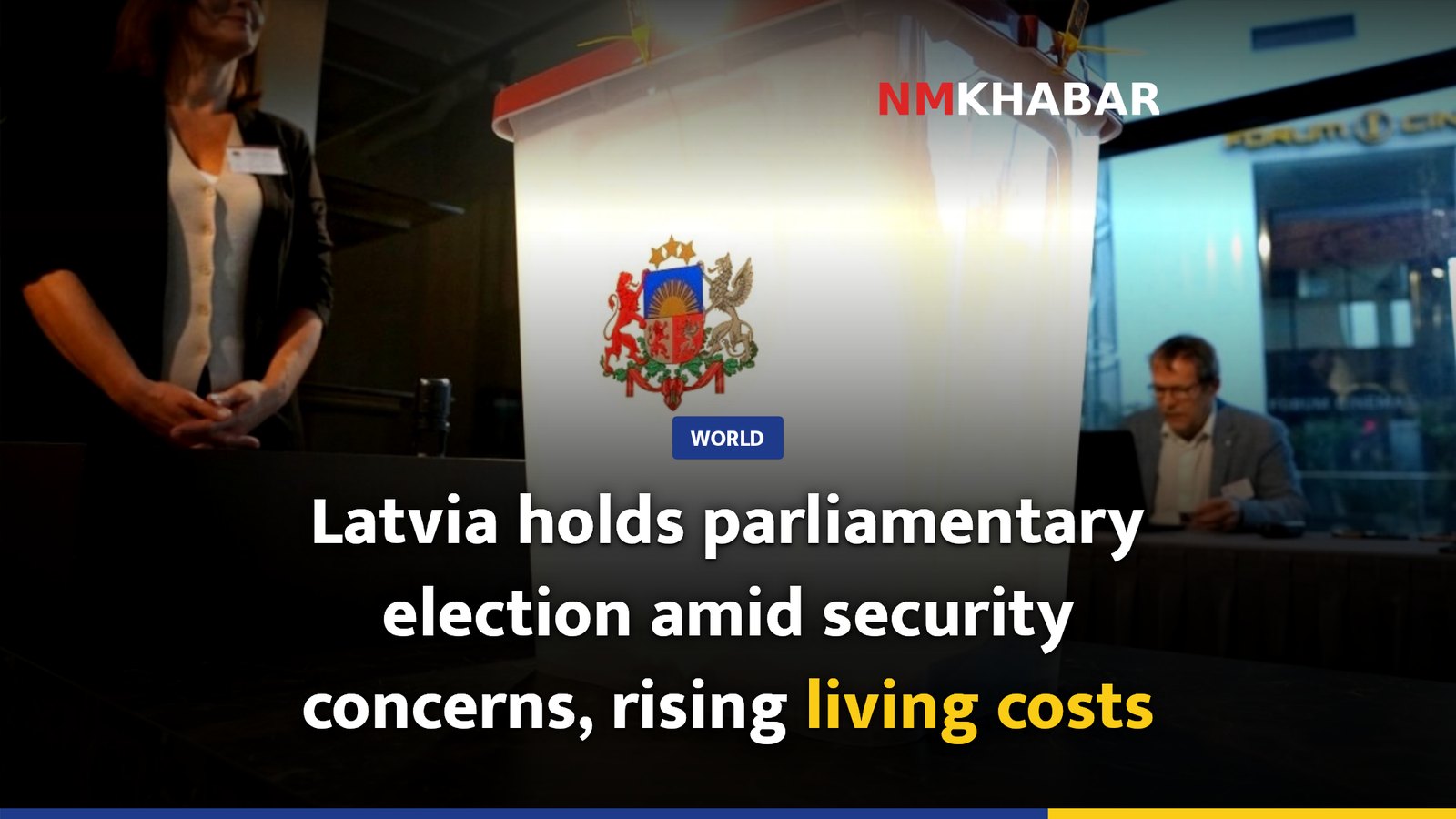
Latvia holds parliamentary election amid security concerns, rising living costs
Latvians are casting their ballots in a parliamentary election today, Saturday, October 3, 2026, with national security and the rising cost of living being the dominant issues for voters.
NM Khabar English Desk
3 October 2026, 5:58 pm
3 min read
Size:
NM Khabar English Desk
Correspondent · NM Khabar
NM Khabar staff reporter. Follow us for accurate, fact-based and fair reporting from Nepal.