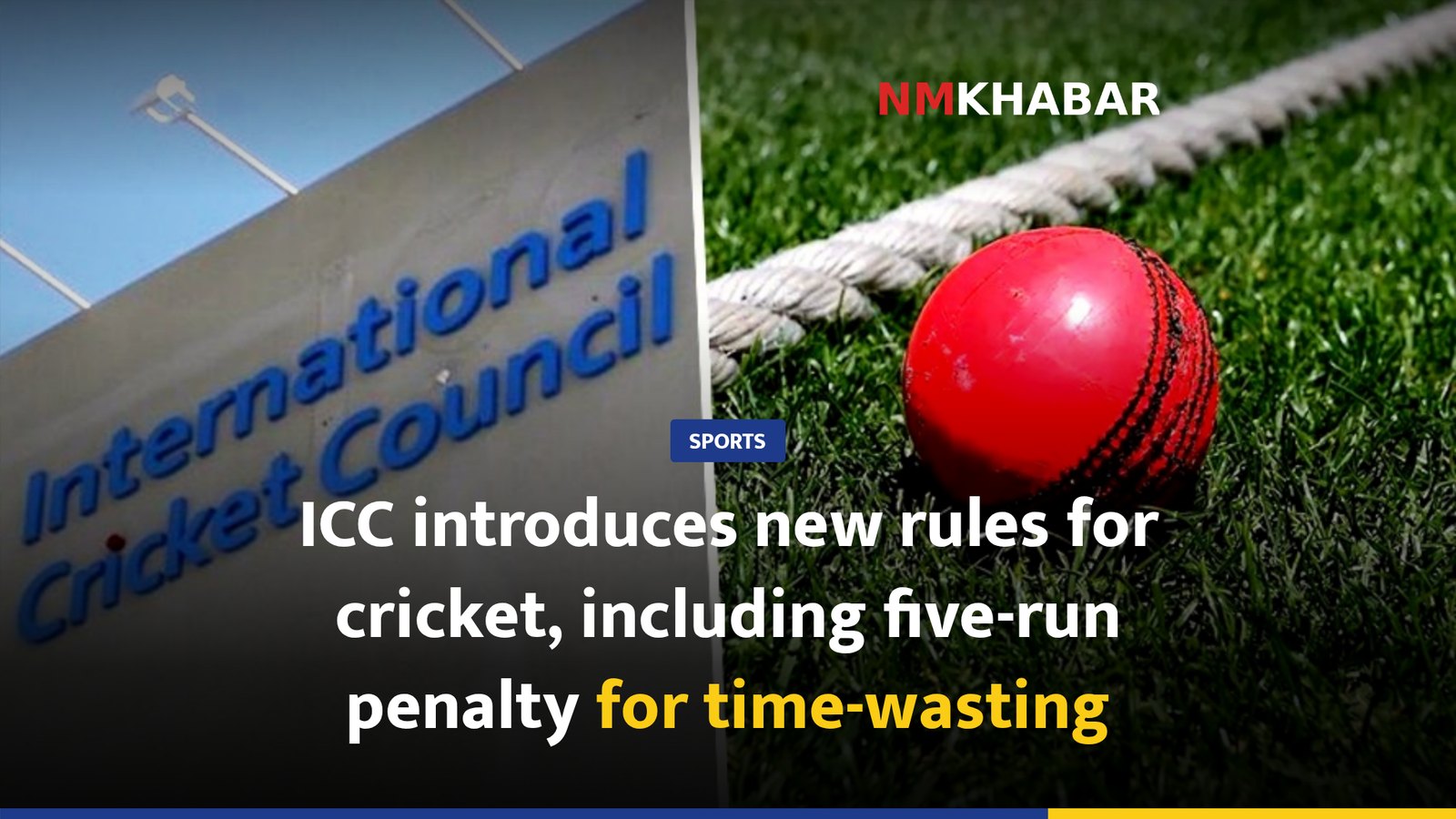
The International Cricket Council (ICC) has implemented a series of new playing conditions for international cricket, effective October 1, 2026. Among the significant changes is a five-run penalty for batters who repeatedly waste time, aiming to improve the pace of play.
Under the new rules, male batters will receive a warning for the first instance of failing to be ready to face a ball within the stipulated time. A second offense will result in a final warning, while a third and subsequent infractions will incur a five-run penalty for the opposing team. Persistent time-wasting could also lead to further action under the ICC Code of Conduct.
The new regulations also introduce revised specifications for cricket balls, setting different size and weight limits for men’s, women’s, and junior cricket.
Clarifications have been made regarding overthrows. An overthrow will now only be counted when the fielding team attempts to stop a run or effect a run-out by throwing the ball towards the stumps. Misfields that occur while stopping the ball or passing it to another fielder will no longer be considered overthrows.
Umpires have been granted increased discretion in determining when a ball is “finally settled.” The ball is no longer required to be exclusively in the hands of the bowler or wicketkeeper to be deemed settled. Similarly, for run-outs or stumpings, fielders must have full control over the ball; merely touching the ball as the stumps are broken will not suffice.
Pink Ball Trial in Day Tests
To reduce stoppages due to bad light, a trial provision has been introduced for the use of pink balls during day Test matches. This can be decided by mutual agreement between both teams before the start of play. Once the decision to use a pink ball is made, it must be used throughout the match, and teams cannot switch back to a red ball once play has begun.
The end of a day’s play will also see a change. A wicket falling in the final over of the day will no longer automatically conclude play. If weather and match conditions are favorable, play can continue until the final over is completed.
These changes build on the use of pink balls in day-night Test matches, which were introduced to improve visibility under floodlights. The first official day-night Test, using a pink ball, was played between Australia and New Zealand in 2015.
ODI and T20 International Adjustments
In Twenty20 Internationals (T20Is), a fixed 15-minute innings break will be implemented, which can be reduced to a minimum of 10 minutes if time is lost. Additionally, in both One Day Internationals (ODIs) and T20Is, the head coach or a designated representative will be permitted to enter the field during drinks breaks.
The experimental rule regarding leg-side wides in ODIs and T20Is has now been made a permanent fixture of the game.
Saurav Ganguly, the chairman of the ICC Men’s Cricket Committee, stated that these new changes aim to address the modern requirements of the game while maintaining clarity and consistency in the rules. The new rules will apply to all international series commencing on or after October 1, 2026. Series that have already begun before this date will continue under the previous regulations.
There has been ongoing debate among players and coaches regarding the behavior of the pink ball, with some suggesting it produces more swing in the air compared to the traditional red ball.