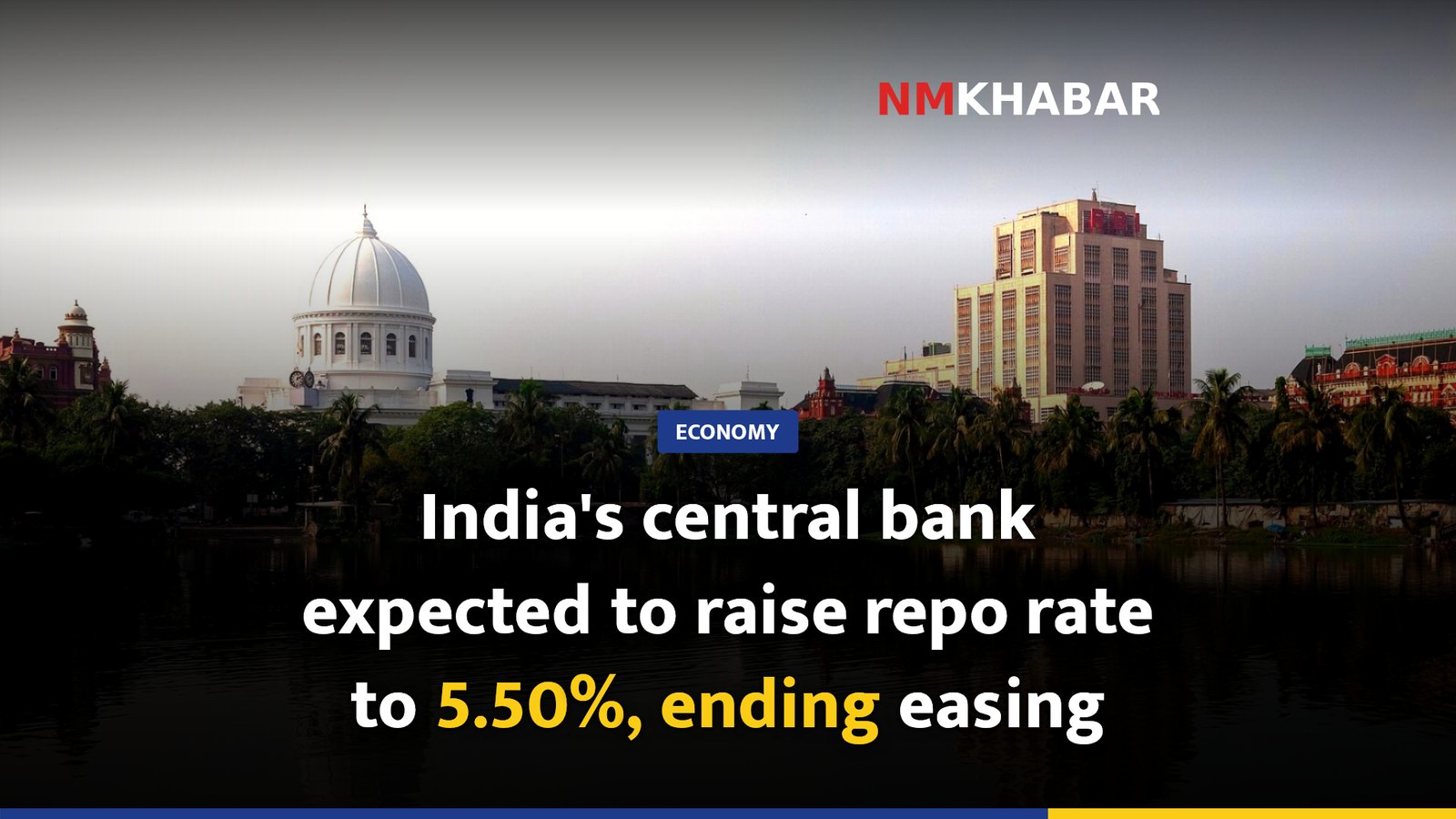
India’s central bank, the Reserve Bank of India (RBI), is expected to raise its policy repo rate by 25 basis points to 5.50 percent on October 7, 2026. This move would conclude nearly two years of monetary easing and is anticipated to initiate a more aggressive rate-hike cycle, increasing borrowing costs across the economy.
The expected rate hike comes amidst rising retail inflation, which the Indian government aims to keep within a target band. India’s retail inflation, based on the Consumer Price Index, reached 4.82 percent in August 2026, up from 4.45 percent in July. Similarly, food inflation, measured by the Consumer Food Price Index, climbed to 5.95 percent in August from 5.52 percent in July. The Indian government has maintained a retail inflation target of 4 percent, with a band of +/- 2 percent, for the period from April 1, 2026, to March 31, 2031.
India’s economy continues to grow despite inflationary pressures. The country’s Gross Domestic Product (GDP) grew by 7.8 percent in the first quarter of the fiscal year 2026-27, as reported on August 31, 2026. Forecasts for the full fiscal year 2026-27 project a GDP growth rate of 6.6 percent by the State Bank of India and 6.1 percent by the Organisation for Economic Co-operation and Development (OECD).
The RBI has attributed the increased price pressures to several factors, including rising energy prices, an uptick in food inflation, disruptions linked to El Niño, and ongoing conflict in West Asia, alongside global economic uncertainties.
Impact on Nepal’s Economy
An increase in interest rates by India’s central bank could directly affect Nepal’s economy. Nepal’s economy is largely intertwined with India’s, meaning higher borrowing costs in India could put pressure on Nepal’s currency exchange rate and overall economic growth. Dr. Bishwanath Paudel serves as the current Governor of Nepal Rastra Bank, the central bank, appointed on May 20, 2025. Nepal is entirely dependent on India for fuel, and remittances from Middle Eastern countries are crucial for the Nepali economy, suggesting indirect impacts. However, specific details regarding the direct effects on farmers, traders, or local governments in Madhesh Province and the Terai region are not yet available.
Background and Future Outlook
The Reserve Bank of India (RBI) adopted a Flexible Inflation Targeting Framework (FITF) in 2016, which aims to keep inflation at a 4 percent target. Sanjay Malhotra serves as the current Governor of the RBI, appointed on December 11, 2024. Previously, in April 2025, the Monetary Policy Committee (MPC) had reduced the policy repo rate by 25 basis points to 6 percent, which has since fallen to its current 5.25 percent.
The RBI’s Monetary Policy Committee (MPC) is scheduled to meet on October 5, 6, and 7, 2026, with the outcome expected to be announced on October 7. Future MPC meetings are slated for December 2-4, 2026, and February 3-5, 2027, where further policy decisions will be made. The RBI also released a discussion paper for public feedback in March 2026, ahead of the mandatory second five-year review of its inflation targeting framework.