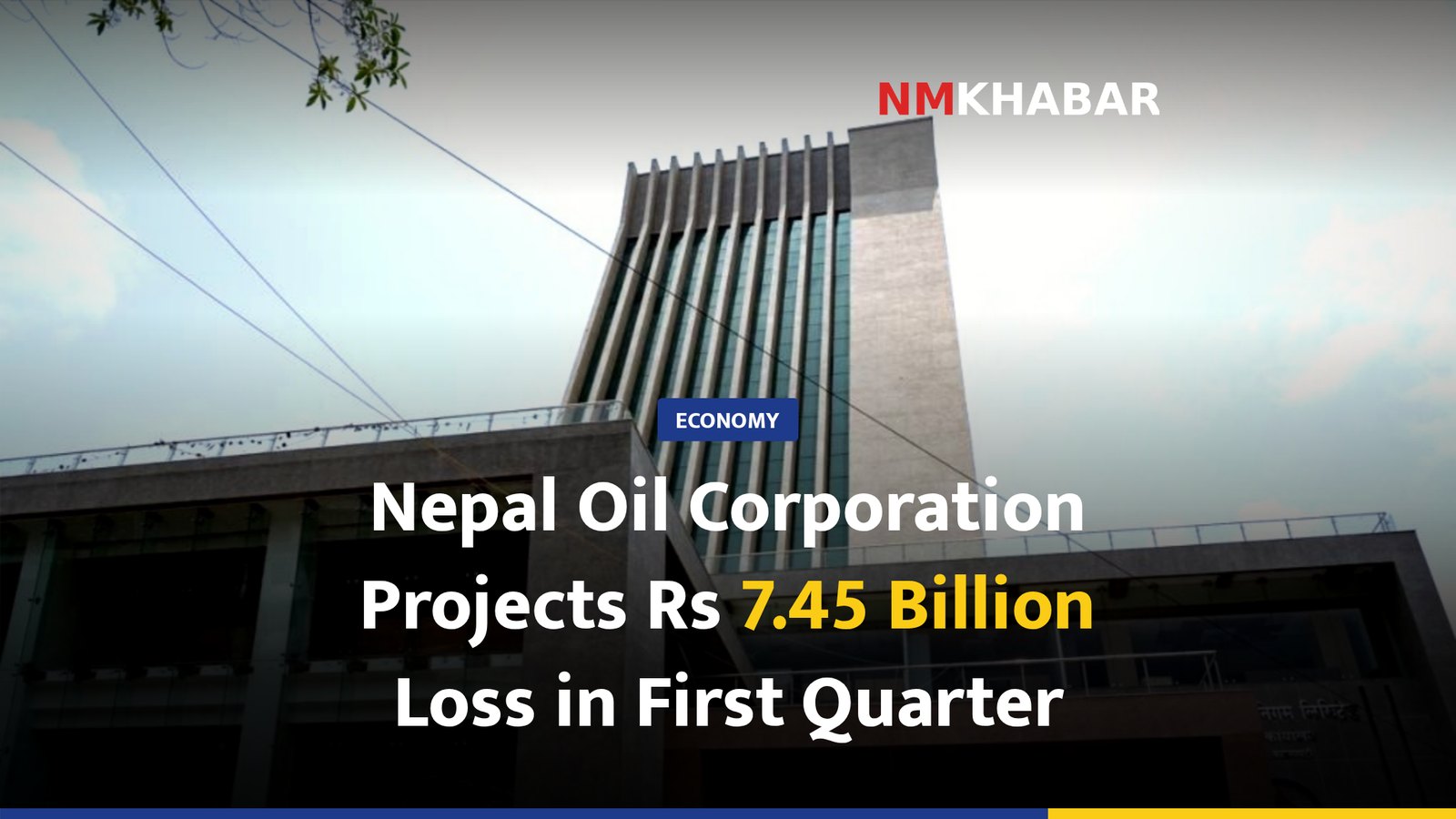
Nepal Oil Corporation (NOC) is projected to incur a net loss of approximately Rs 7.45 billion within the first three months of the current fiscal year 2083/84 (Saun-Ashoj). This significant deficit stems primarily from the failure to apply an automated pricing system, which would typically adjust domestic fuel prices in line with international market fluctuations.
The corporation’s financial woes have been exacerbated by a substantial increase in the import of Liquefied Petroleum (LP) gas, which is being sold at a considerable loss per cylinder. While the initial fortnight of Saun saw a profit of Rs 710 million, subsequent periods have shown a consistent decline, with losses mounting significantly.
Mounting Losses and Price Discrepancies
Data released by NOC reveals a sharp increase in losses. In the second fortnight of Saun, the corporation reported a loss of Rs 1.49 billion. This trend continued into Bhadra, with a loss of Rs 313.5 million in the first fortnight and a further increase to Rs 1.24 billion in the second fortnight. The situation worsened in Ashoj, with a projected loss of Rs 1.91 billion in the first half and an estimated Rs 3.20 billion for the latter half of the month.
Manoj Thakur, spokesperson for Nepal Oil Corporation, attributed the dire financial situation to geopolitical factors and volatile international crude oil prices. “We are compelled to accept international market prices beyond our control,” Thakur stated. “The biggest challenge right now is the substantial loss per cylinder of LP gas and its increasing demand.” Currently, NOC is incurring a loss of Rs 493 per cylinder of LP gas, Rs 26.5 per litre of petrol, and Rs 48.5 per litre of diesel.
Despite receiving new purchase prices from Indian Oil Corporation (IOC) that indicate significant increases – Rs 20.44 per litre for petrol, Rs 20.21 for diesel, Rs 15.96 for kerosene, Rs 18.66 for jet fuel, and Rs 81.32 for gas – NOC decided not to raise prices on October 1, 2026 (Ashoj 15, 2083 BS). This decision was made to provide relief to consumers during the festive season.
Consumer Relief Amidst Financial Strain
Surendra Kumar Paudel, Executive Director of Nepal Oil Corporation, acknowledged that while international prices have risen, the corporation is selling fuel at a loss to prioritize consumer welfare, especially during the festive period. “Any immediate increase in diesel prices would directly impact bus fares, and a rise in jet fuel prices would affect airfares,” Paudel explained. “The government and the board have adopted a policy to keep prices stable for the benefit of consumers during the festivals, similar to past practices.”
The current losses are being managed through NOC’s ‘Price Stabilization Fund’, which currently holds Rs 4.70 billion. This fund is expected to help maintain supply continuity for one to two months. NOC hopes for a reduction in international prices within the next month; otherwise, they will have to seek government approval for price hikes.
Supply Chain Challenges and Future Outlook
Despite increased gas imports, a shortage persists in the market, with consumers still complaining about unavailability. Executive Director Paudel clarified that gas supply from India has not been halted but that transportation has been hampered by natural disasters, delaying gas tanker movement.
If the current rate of loss continues, NOC’s accumulated profits could be depleted within three months, potentially forcing them to seek loans from the government for fuel procurement. Paudel suggested that a reduction in the Rs 15 tax imposed by the government on petroleum products could help NOC recover from its losses. However, the absence of a minister at the Ministry of Industry, Commerce and Supplies for nearly four months has led to a lack of political consultation on measures to mitigate NOC’s deficit.
While the gas supply is gradually improving, officials estimate it will take about another month for the situation to return to complete normalcy, ensuring consumers do not have to queue for gas.